Masseter Botox for Jaw Clenching, TMJ Relief & Slimming
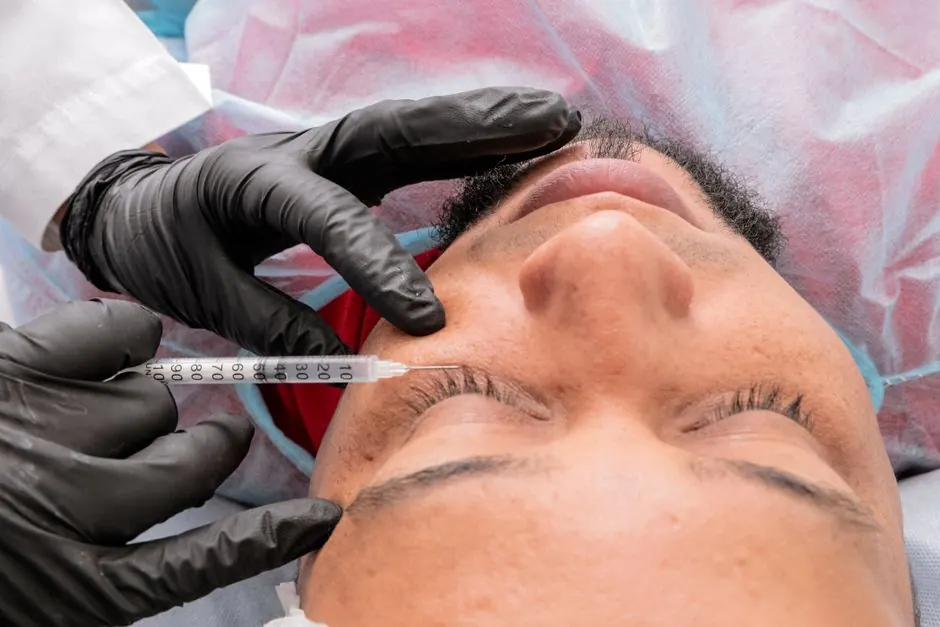
If you wake up with a sore jaw, catch yourself clenching on your commute, or feel your face has grown squarer over the years, your masseter muscles may be the reason.
Masseter Botox is a series of small injections into the jaw muscles that relax overactivity — easing clenching, grinding, and TMJ-related tension while gradually slimming a square jawline. At Marie Shelley Laser & MedSpa in Roseville, treatment takes about 40 minutes, and most clients notice initial changes within a week.
This guide covers how the treatment actually works, who it helps, what it honestly can't do, and what a realistic timeline looks like — so you can decide whether it's worth a consultation.
What Is Masseter Botox and How Does It Work?
The masseter is the thick chewing muscle you can feel bulge at the angle of your jaw when you bite down. Masseter Botox uses a neuromodulator — Botox® or Jeuveau® — injected into that muscle to block some of the nerve signals telling it to contract.
Two things follow from that. First, the muscle stops firing at full force around the clock, which is why people who clench or grind often feel their jaw tension, morning soreness, and tension-type headaches ease. Second, a muscle that works less hard slowly loses bulk — the same way a muscle you stop training shrinks. That gradual thinning is what softens a square, muscular jawline into a slimmer lower face.
The treatment does not touch bone, skin, or fat. If your jaw width comes from bone structure rather than muscle, relaxing the masseter will not change it — a good injector checks this by having you clench while they palpate the muscle. That distinction is one of the first things we assess during a consultation in our Roseville studio.
Jaw Slimming vs. TMJ Relief: Two Goals, One Muscle
People come to masseter treatment from two different directions, and it helps to know which one you are, because the goals, dosing philosophy, and timelines differ:
| Jaw slimming (cosmetic) | Clenching / TMJ relief (functional) | |
|---|---|---|
| Main goal | Softer, narrower lower face | Less clenching force, tension, and soreness |
| Best candidate | Visibly bulky masseters when biting down | Grinding, morning jaw fatigue, tension headaches |
| When results show | Slimming builds over 4–6 weeks as muscle volume reduces | Tension relief often starts within the first 1–2 weeks |
| Maintenance | Repeat treatments; intervals often stretch out over time | Typically every 3–4 months while symptoms recur |
Many clients want both — the relief is what brings them in, and the contour change is the welcome side effect. In a published randomized trial, even low-dose masseter injections measurably reduced nighttime grinding symptoms, with effects gradually fading around the three-month mark — which is why functional treatment is planned as a maintenance schedule, not a one-off fix.
What Should You Try Before Botox?
Honest answer: injections are not the first move for everyone, and a few cheaper steps are worth trying — sometimes alongside treatment, sometimes instead of it.
- A night guard from your dentist. If you grind in your sleep, a fitted guard protects your teeth regardless of whether you also treat the muscle. Botox does not repair worn enamel.
- Daytime habit awareness. Teeth should not touch at rest. Many people discover they clench through emails and Highway 65 traffic without realizing it.
- Heat and stress management. Warm compresses and basic stress care genuinely help mild, occasional tension.
And see a professional first when the picture is bigger than muscle tension: jaw clicking or locking, tooth pain, bite changes, or one-sided pain deserve a dental or TMJ-specialist evaluation before any cosmetic treatment. True temporomandibular joint disorders involve the joint itself — not just the muscle — and injections are one tool among several, not a substitute for diagnosis. If that's your situation, we'll say so at consultation and point you to the right provider in the Placer County area rather than treat around the real problem.
Who Should Not Get Masseter Botox?
Candidacy screening is where a medical practice earns its keep, and some people should be screened out — either permanently or for now:
- Pregnant or breastfeeding clients. Neuromodulators are not used during pregnancy or nursing; this is standard screening at any reputable practice, and we will ask.
- Neuromuscular conditions. Disorders that affect nerve-muscle signaling, such as myasthenia gravis, are a contraindication to botulinum toxin treatment — disclose your full medical history at consultation.
- Prior reaction to a botulinum toxin product or active skin infection at the injection sites.
- Bone-based jaw width. If clenching doesn't produce a firm, bulky muscle under your fingers, the width is likely skeletal — and relaxing a muscle that isn't oversized won't narrow it. We would rather tell you that at consultation than sell you a treatment that can't meet your goal.
- Untreated dental disease. Grinding that's wearing your teeth needs a dentist involved; masseter treatment can reduce the force, but it is not dental care.
None of this is meant to alarm — for healthy adults with genuinely overactive masseters, this is a routine, well-tolerated treatment. The point is that a five-minute screening conversation is the difference between a good outcome and a refund conversation, and it's why we treat the consultation as a real medical visit rather than a formality.
Is Masseter Botox FDA-Approved?
Not yet — and you should know that before booking anywhere. Masseter treatment is currently an off-label use of both Botox® and Jeuveau®, which are FDA-approved neuromodulators for other indications such as frown lines. Off-label use of approved medicines is legal and common in aesthetics, but a provider should tell you plainly rather than let you assume.
The regulatory picture is actively changing: in August 2026, the FDA accepted Allergan's application for Botox® Cosmetic in masseter muscle prominence, supported by two Phase 3 studies showing significant improvement in jaw prominence and patient satisfaction. Acceptance for review is not approval — but it means the evidence base has matured well beyond the TikTok-trend stage.
What off-label status means practically: dosing is individualized rather than standardized. Published trials have studied a wide range — from roughly 10 units per side in low-dose bruxism protocols to substantially more for large muscles — and research on bruxism treatment consistently finds that results depend on the injector matching dose and placement to your anatomy. This is exactly why who injects you matters more than the brand of toxin.
What Happens at Your Masseter Botox Appointment in Roseville?
At Marie Shelley Laser & MedSpa, masseter appointments run about 40 minutes. Treatment is performed by our licensed medical team — the practice was founded by Shelley Mandal, BSN, RN, and operates under the medical direction of Dr. Steven Freedman, MD, who has trained injectors for aesthetic companies. Injections at our studio are performed by licensed medical providers, never delegated outside scope of practice.
The visit itself is straightforward: you clench, we map the muscle borders and mark injection points, cleanse the skin, and place a few small injections into each masseter. Most clients describe it as quick pinches; there is no sedation and no downtime — you can drive back to work in Rocklin or Citrus Heights immediately. We schedule a follow-up around the two-week mark to assess symmetry and decide whether a small touch-up is warranted.
Afterward, the standard guidance is simple: stay upright for a few hours, skip strenuous exercise for the rest of the day, and don't massage the area. Mild tenderness or a small bruise at injection points is the most common short-term effect. Less common, temporary effects can include chewing fatigue with tough foods in the early weeks or, rarely, a briefly uneven smile if the product affects nearby muscles — another reason experienced, anatomy-first injection matters.
If you're comparing lower-face options, masseter treatment pairs logically with neck Botox for platysmal bands, which addresses the neck and jawline border rather than the chewing muscle. And if your interest is facial volume rather than muscle, a different tool entirely — like the collagen-stimulating approach discussed in our Sculptra guide for Sacramento-area patients — may fit better. Book through our masseter Botox service page or ask us to compare options honestly at a consultation.
What Results Are Realistic — and How Long Do They Last?
Here is the honest timeline we set with clients:
- Days 2–7: the muscle begins responding; clenchers often notice softer morning tension first. Neuromodulators generally take effect over the first several days, reaching full muscular effect around two weeks.
- Weeks 4–6: visible slimming appears as the muscle loses bulk — this is the window where jawline photos start showing a difference.
- Months 3–4: muscle activity gradually returns; functional relief typically needs retreatment in this window to stay ahead of symptoms.
Over the longer term, many consistent clients find the rhythm works in their favor: a masseter that spends most of the year relaxed stays smaller, so maintenance visits often stretch further apart than the first few. That is a tendency we see in practice, not a guarantee — muscle bulk, habits, and stress levels all pull on the timeline, and a high-stress season of clenching can shorten it.
What masseter Botox will not do: it won't change bone structure, lift skin, remove submental fullness under the chin, or permanently cure grinding — stop treating, and the muscle rebuilds over months. If your goals include skin quality or facial-volume concerns alongside jaw tension, we'd rather map that honestly — the way we approach structural facial changes in our guide to worn-out skin and sunken folds — than promise one injection solves everything.
One practical tip we give every cosmetic client: take your own "before" photo, relaxed and clenched, from the front and at a three-quarter angle, in the same light you'll use later. Jawline change is gradual enough that day-to-day mirrors hide it; six-week side-by-sides don't.
Why Jaw Clenching Is So Common Around Roseville
We see a consistent pattern in our studio: desk workers and commuters who spend their days between screens and I-80 or Highway 65 traffic, carrying stress in their jaw and shoulders without noticing until the soreness becomes routine. Roseville's work-hard, outdoors-on-weekends rhythm is great for a lot of things — but daytime clenching thrives on exactly this mix of concentration and commute.
The practical local advantage: because there's no downtime, masseter appointments fit inside a normal workday — clients come in from Granite Bay and Rocklin on a lunch hour and go straight back. If a fitted night guard is also part of your plan, we're glad to coordinate with your Placer County dentist so the muscle side and the dental side of grinding are handled together.
Your Masseter Botox Consultation in Roseville
If your jaw is sore, your face feels wider than it used to, or a dentist has mentioned grinding, a consultation will tell you whether your masseters are actually the cause — and whether treatment is worth it for your anatomy and goals. No pressure, no assumption that injections are the answer.
Ready for your masseter Botox consultation in Roseville? Schedule a consultation at Marie Shelley Laser & MedSpa, 720 Sunrise Ave, Suite 204 B, Roseville, CA 95661, or call (916) 741-6772. We'll assess your jaw honestly and map out what realistic results look like for you.
Frequently asked questions
Does masseter Botox change your smile?
When placed correctly, no — the masseter sits away from your smile muscles, and treatment relaxes chewing force, not expression. A temporarily uneven smile is a known but uncommon effect when product spreads beyond the masseter, which is why anatomy-focused injection technique and conservative dosing matter more than chasing a bargain price.
How many units of Botox do you need for the masseter?
There is no single standard dose — masseter treatment is individualized to your muscle bulk and goals. Published trials have studied doses from roughly 10 units per side in low-dose bruxism protocols to substantially higher for prominent muscles. Your provider determines units at consultation by palpating the muscle while you clench.
Will masseter Botox make it hard to chew?
Everyday chewing stays normal for most people — the goal is reducing excess clenching force, not disabling the muscle. Some clients notice mild chewing fatigue with very tough or chewy foods during the first few weeks, and that typically fades as surrounding muscles compensate. Tell your injector if it persists.
How soon will my face look slimmer after masseter Botox?
Slimming is the slow part: tension relief can start within the first week or two, but visible jawline narrowing builds over four to six weeks as the relaxed muscle gradually loses bulk. Photos taken at six weeks — not day three — are the fair before-and-after comparison.
Does insurance cover masseter Botox for TMJ?
Usually not. Jaw slimming is cosmetic and always self-pay. Some medical plans cover botulinum toxin for specific, physician-documented TMJ disorders, but that coverage is uncommon, plan-specific, and runs through medical providers rather than med spas — treatment at our Roseville studio is self-pay, with pricing set at consultation.
Is Jeuveau as good as Botox for masseter treatment?
Both are FDA-approved neuromodulators that work the same way — blocking nerve signals to the muscle — and masseter use is off-label for both. Differences between brands are modest compared with the difference an experienced injector makes. We offer both and will recommend one based on your history and response.
Sources
- Allergan Aesthetics (AbbVie) — U.S. FDA Acceptance of Supplemental Biologics License Application for BOTOX® Cosmetic for Masseter Muscle Prominence, press release, August 2026
- Randomized controlled clinical trial — Evaluation of the Efficacy of Low-Dose Botulinum Toxin Injection Into the Masseter Muscle for the Treatment of Nocturnal Bruxism, PMC (PubMed Central)
- PMC — Factors Influencing the Effectiveness of Botulinum Toxin Therapy in Bruxism Management, 2025
- Healthline — How Long Does Botox Take to Work? Timeline and More, 2024
- Drugs.com — Masseter Botox for Jaw Slimming: Benefits, Cost, Side Effects, medical answers, 2024
- ClinicalTrials.gov — BOTOX® (onabotulinumtoxinA) Treatment of Masseter Muscle Prominence, Phase 3 study record
Ready for your masseter Botox consultation in Roseville? Marie Shelley Laser & MedSpa offers expert aesthetic treatments at 720 Sunrise Ave, Suite 204 B, Roseville, CA 95661. Call us at (916) 741-6772 or book online.